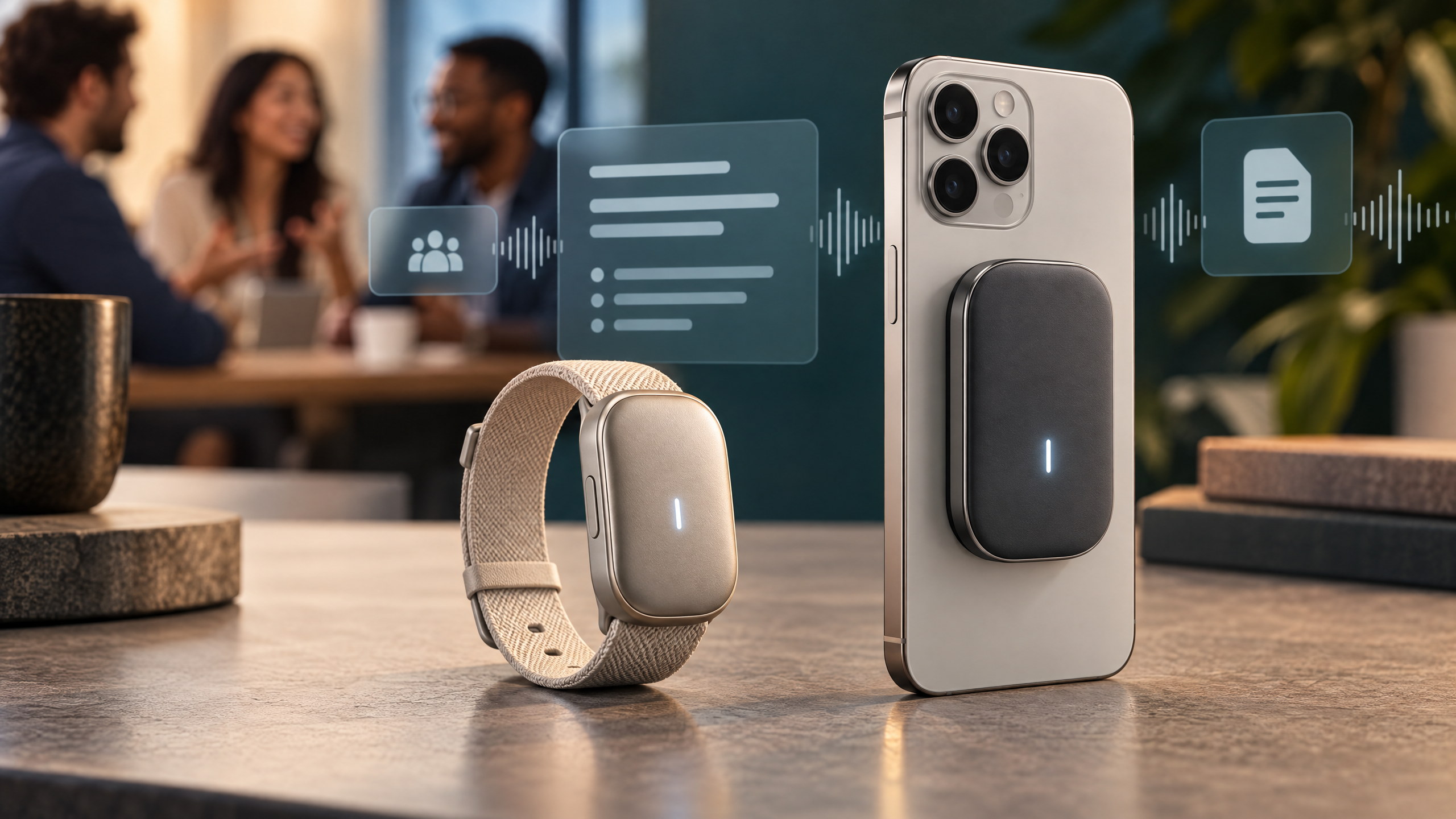
Amazon is expanding its personal-AI hardware lineup with two Bee devices: Bee Frontier, a wearable bracelet that can also clip to clothing, and Bee Eclipse, a magnetic phone attachment. The products are designed to turn conversations into summaries, reminders and to-dos, bringing ambient AI into everyday settings rather than limiting it to a phone app. [1] [2]
The distinction between what is shipping and what is announced matters. Amazon lists Bee Frontier at $74.99, available now. Bee Eclipse starts at $99.99, but Amazon describes it only as “coming soon” and has not provided a firm release date. Frontier comes in Onyx, Lavender and Sage; Eclipse is listed in Silver, Midnight, Honey and Blush. [1]
What the subscription adds
Amazon says summaries, recaps and a 14-day memory are included with the device. Its optional Bee Pro plan costs $11.99 a month after a 30-day trial and adds longer-term recent summaries, integrations with services such as Gmail and Google Calendar, suggested to-dos and a personal chat assistant. Feature access therefore depends partly on the subscription, not just the hardware purchase. [1] [2]
The privacy details are part of the product
Amazon says users control when processing starts with a button and an indicator light. The company also says audio is processed in real time and then deleted, while transcripts are encrypted and users can delete transcripts and summaries. Those are Amazon’s descriptions of its privacy practices, not independent security-audit results. [1]
The devices are meant to capture conversations, so bystander consent is a practical concern. Amazon says participants can be prompted when recording begins, but CNET reports that the prompt is optional. Buyers should not treat a light or a prompt as a substitute for understanding the rules where they use the device or the expectations of people nearby. [1] [3]
Bee’s pitch is convenience: capture a discussion, then retrieve its main points and action items later. Whether that is useful will depend on how reliably the service identifies what matters—and whether users are comfortable bringing a microphone-equipped assistant into conversations at all. [2] [4]