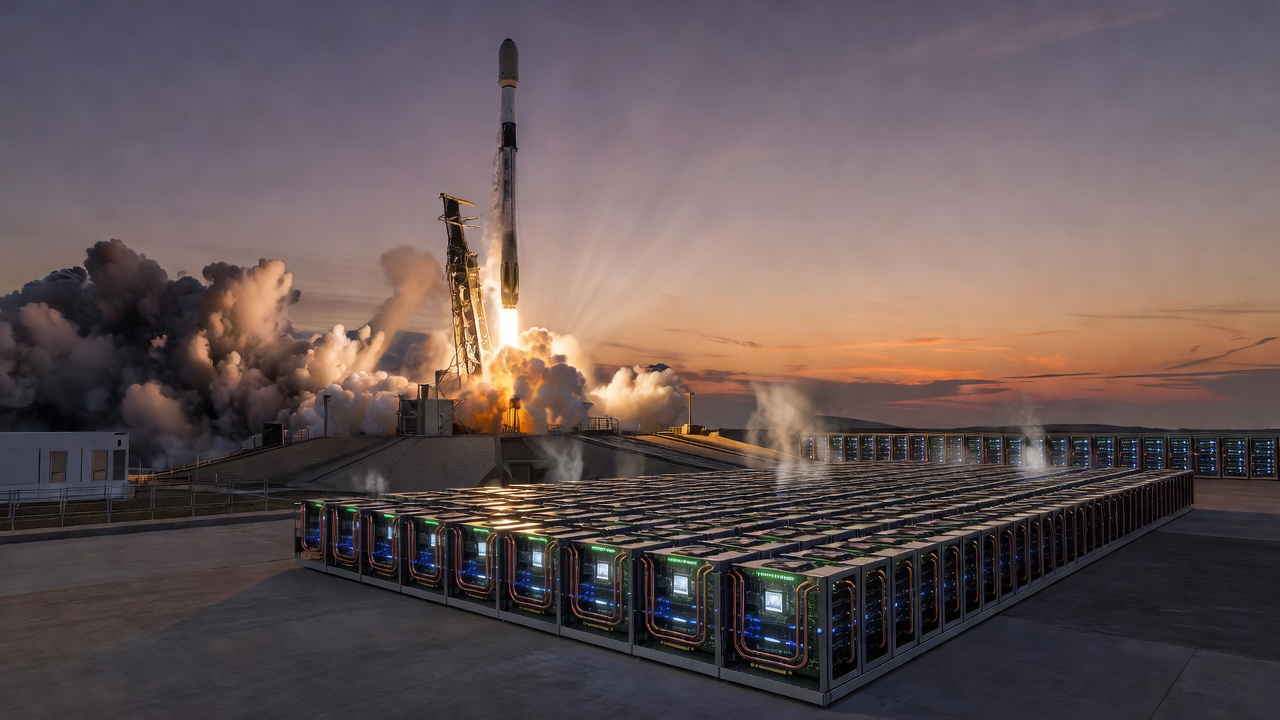
Elon Musk said on October 25, 2026, that SpaceX has closed a $40 billion debt financing package to purchase graphics processing units for its artificial intelligence efforts. The chips are expected to arrive in the first and second quarters of 2027. The announcement, made on X, underscores the enormous capital required for AI compute while also illustrating how credit markets are becoming more selective about pure-play AI infrastructure borrowers.
What Happened
Musk posted that SpaceX closed the $40 billion raise thanks to its investment-grade credit rating and revenue from Starlink satellite internet and rocket launches. He described the package as “primarily callable debt for GPU purchases that will arrive in Q1 and Q2,” adding that it would not be a major factor in the current quarter.
Reuters and Bloomberg reported the closing based on Musk’s statements. Earlier reporting had indicated SpaceX was in talks with banks and asset managers for roughly $10 billion in bank loans and $30 billion in investment-grade debt to buy Nvidia chips, potentially structured off-balance-sheet via a special-purpose vehicle to protect the company’s credit rating. Goldman Sachs was reported to be leading discussions, with Apollo Global Management among the investors involved.
Why the Financing Matters
The deal highlights the sheer scale of spending required to secure advanced AI accelerators. SpaceX’s AI unit has been a growing consumer of capital; earlier filings showed AI-related capital expenditure of nearly $40 billion in the first nine months of 2026. The new debt is aimed at additional GPU capacity rather than replacing existing infrastructure.
Musk also used the occasion to comment on broader credit conditions. He wrote that debt markets have “almost entirely shut off access to money for any company that doesn’t have substantial revenue independent of AI data centers.” He predicted that more than 200 “neocloud” providers—companies whose business is primarily renting AI compute—would face failures and consolidation. SpaceX, he said, would not acquire any of them.
Implications for the Industry
The financing shows that established companies with diversified revenue streams retain access to large-scale debt for AI infrastructure, while pure-play neoclouds may struggle. For developers and enterprises that rely on rented GPU capacity, this could mean tighter supply or higher prices if smaller providers exit the market.
Nvidia remains the primary beneficiary of these large GPU orders. Deliveries targeted for early 2027 suggest SpaceX is securing capacity for models and services that will be trained or served well after the current wave of frontier systems.
TechPulse Takeaway
SpaceX’s $40 billion GPU debt package is a concrete data point in the AI infrastructure race: capital is still available for borrowers with real non-AI revenue, but the window is narrowing for everyone else. The chips won’t arrive until 2027, yet the financing itself already signals how selective lenders have become.
Sources
- Reuters: Musk says SpaceX raised $40 billion in debt deal, predicts neocloud shakeout (October 25, 2026)
- Bloomberg: Musk Claims SpaceX Closed $40 Billion Debt Deal for AI Chips (October 25, 2026)
- CNBC: SpaceX closes $40 billion debt deal for AI chips, Elon Musk says (October 26, 2026)